



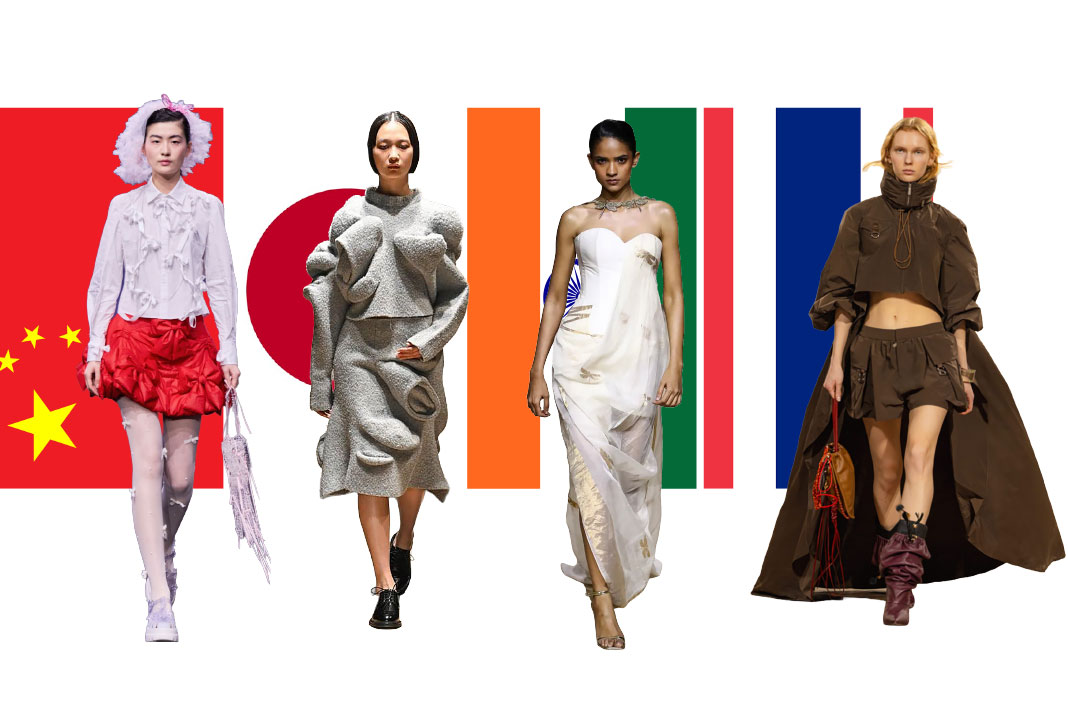
Bahrain has always had the world woven into its fabric. So why not let our wardrobes reflect that global spirit? This Autumn, we swap souvenirs for style inspiration as WTM pays homage to the dynamic fashion scenes of eight cities across Asia, Africa, Europe and Latin America. Consider this your fashion passport for the season.
Shanghai, China
Colour Rush
Shanghai Fashion Week turned up the saturation. Candy pink and vivid red swept through collections by Susan Fang, Shuting Qiu and 8ON8, while expressive textures and confident silhouettes signalled a move towards something bolder.
That boldness reflects Shanghai’s contemporary fashion scene. Chinese references meet modern design language. Shuting Qiu incorporated silks from her native Hangzhou, while Samuel Guì Yang approaches Chinese identity through a contemporary lens. Rather than relying on familiar motifs, these designers find contemporary expressions for their heritage.
Bring it to Bahrain: Let colour travel. A cherry-red dress, vivid pink tailoring or saturated accessory can bring Shanghai’s energy into a Bahrain wardrobe without reproducing culturally specific design elements.
Tokyo, Japan
Shape Shifters
Tokyo is playing with the shape of clothes. Pillings stretched knits over crinolines, shifted shoulders forwards and buttoned cardigans asymmetrically. Fetico cinched waists and sculpted leather into precise feminine forms.
Silhouette experimentation has deep roots in Japanese fashion. Japanese designers have long challenged conventional proportion and beauty, and that spirit continues through a new generation. At Pillings, designer Ryota Murakami deliberately finds beauty in awkwardness and imperfection, while Fetico’s Emi Funayama uses construction to reconsider how femininity can be expressed.
Bring it to Bahrain: An exaggerated sleeve, sculptural peplum or asymmetric top can deliver the idea in lighter fabrics better suited to the Kingdom.
Mumbai, India
Woven Air
Rahul Mishra gave autumn an unexpectedly light touch as AFEW opened Lakmé Fashion Week in Mumbai. His White Gold collection returned to cotton and handloom, including a fine cotton-silk blend developed with Chanderi master weaver Hukum Kohli. Sari-inspired drapes met structured forms as translucent Chanderi created movement without weight.
The fabric carries a story of its own. Chanderi weaving has centuries-old Indian roots, while cotton has long been central to its textile traditions. For Mr. Mishra, it also marked a return to the handloom and cotton of his early career two decades ago.
Bring it to Bahrain: Let fabric create the impact. Look for movement and craftsmanship. Fine cotton-silk and translucent layers offer autumn richness without winter weight.
Bangkok, Thailand
Sport Meets Luxury
Bangkok brings an adventurous edge to polished dressing. SIRIVANNAVARI mixed technical nylon, sport-infused bombers and windbreakers with fluid dresses. Mountaineering-inspired drawstrings and hooks transformed function into decoration, while volume softened the technical edge.
The experimentation is grounded in Thai textile heritage. Koh Kerd silk brocade from Ayutthaya Province was reworked alongside technical materials, while artisans from the SIRIVANNAVARI Atelier & Academy contributed intricate embroidery.
Bring it to Bahrain: Make contrast the styling trick. Try a lightweight utility jacket over something fluid or add a drawstring or buckle to polished separates.
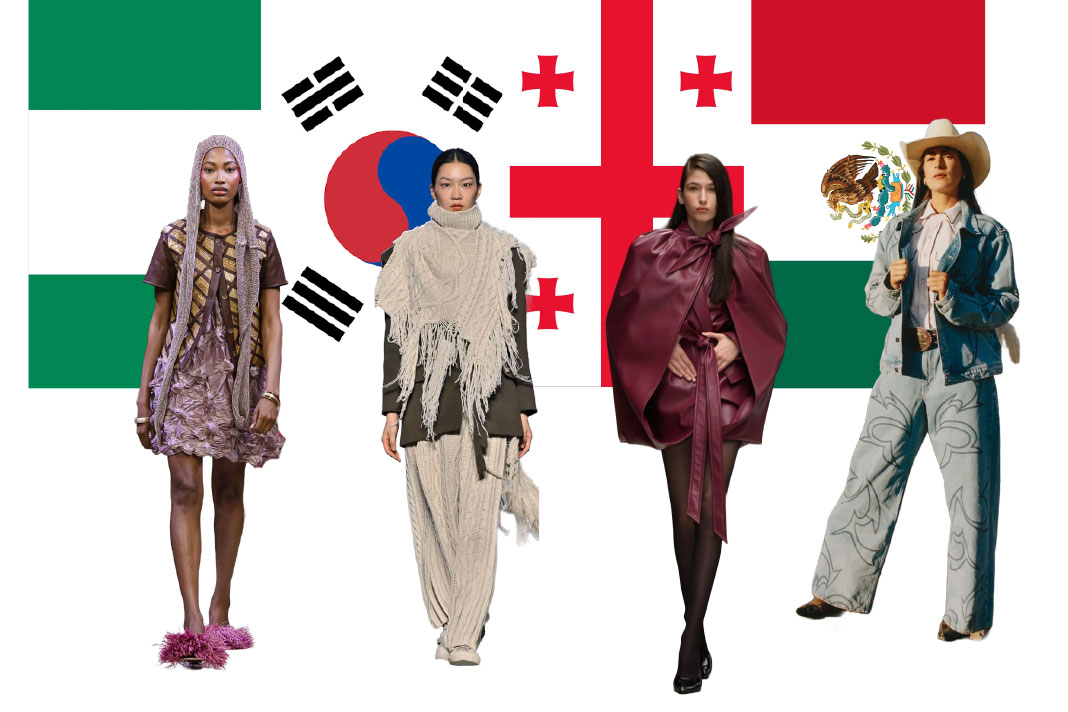 Lagos, Nigeria
Tactile Fashion
Lagos is putting material centre stage. Woven Threads, Lagos Fashion Week’s responsible-fashion platform, took CRAFTED as its 2026 theme, focusing on contemporary craft, material innovation and locally rooted making. Pettre Taylor incorporated dyed textiles, knit structures, crochet and patchwork, while Éki Kéré made raffia and textured surfaces central.
Éki Kéré’s raffia draws from founder Abasiekeme Ukanireh’s home city, Ikot Ekpene in Akwa Ibom, widely associated with the craft. The brand works with artisans using traditional weaving methods, bringing established material knowledge into contemporary fashion. Woven Threads extends that principle across its programme, treating craft as a living part of African fashion rather than simply a reference to the past.
Bring it to Bahrain: Make texture the focus. A woven handbag or hand-worked textile can bring depth to an otherwise streamlined outfit without adding heavy layers.
Seoul, South Korea
Undone Knits
Seoul Fashion Week unravelled one of autumn’s most familiar staples. At Caruso, Adlielos and Mmam, knitwear appeared partially laddered and almost threadbare, with some sweaters deconstructed until barely recognisable. Loose threads and unfinished surfaces became deliberate design features.
The look fits Seoul’s fashion culture, where polished dressing meets experimentation and street influence.
Bring it to Bahrain: Lose the heavy wool but keep the undone effect. Try an open-knit top or lightweight distressed knit over a simple base, letting gaps and loosened construction become the detail.
Tbilisi, Georgia
Architectural Edge
Tbilisi’s 2026 return to the international fashion calendar brought sharp construction into focus. Tamuna Ingorokva paired architectural tailoring and structured silhouettes with leather, jacquard and bouclé. Tatuna explored geometric volumes and pattern cutting, while Aleksandre Akhalkatsishvili deconstructed classic tailoring and worked with materials including vegan leather.
That technical approach shapes Tbilisi’s contemporary fashion identity. Independent labels are recognised for experimental cut and construction, with much of their work connected to local ateliers. Tatuna produces garments by hand in its Tbilisi atelier, making pattern cutting and construction central to its look and process.
Bring it to Bahrain: Seek structure without bulk. An angular blazer, asymmetric hem or sharply cut dress can bring Tbilisi’s architectural sensibility into warmer weather.
Mexico City, Mexico
New Western
Mexico’s vaquero wardrobe is riding into 2026 with renewed relevance. Montserrat Messeguer’s Mujer Caballo reworked denim, leather and her signature cowboy boots through barrel racing. Shot at a ranch in Mexico’s Bajío region, it looked to female riders within a traditionally male equestrian culture.
For Ms. Messeguer, the Western connection is distinctly Mexican. Her work draws on northern Mexico’s vaquero traditions, working with Mexican artisans to preserve techniques including piteado. In Mujer Caballo, the belt buckles belonged to the riders, won through competition, while denim connected it to Mexico’s textile industry. Reclaiming Mexico’s place in cowboy history is central to her brand.
Bring it to Bahrain: Take one code, not the full uniform. Cinch a flowing dress with a substantial leather belt or pair cowboy boots with a midi skirt. The idea is to borrow the strength of the silhouette while letting its Mexican roots remain visible.