



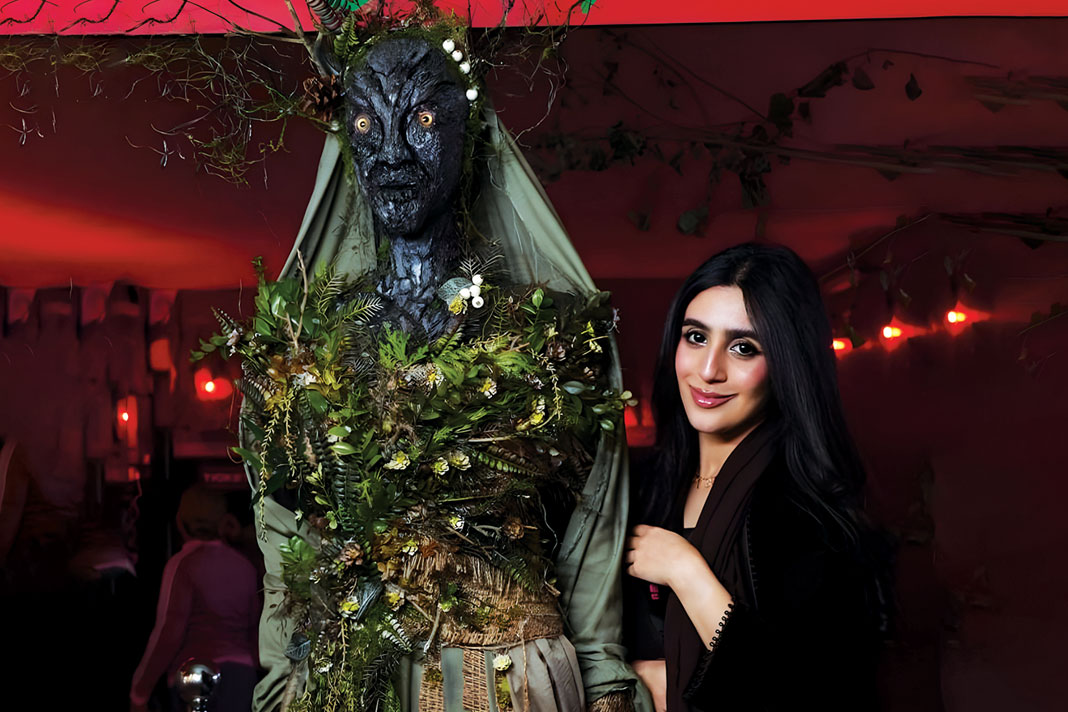
As Bahrain’s art scene continues to evolve, artists like Fatema Al Abbasi reflect a growing confidence rooted in experimentation and cross-disciplinary practice. Working between architecture, visual art and makeup, her practice challenges rigid definitions of medium and signals a broader shift in how creativity is being expressed in Bahrain today.
Form in Flux
Architecture was the starting point for Fatema, grounding her work in structure, space and light. “It has shaped the way I think,” she states. To this day, it continues to influence how she approaches form and visual balance. Visual art and makeup followed more intuitively, becoming parallel expressions rather than departures from her original training.
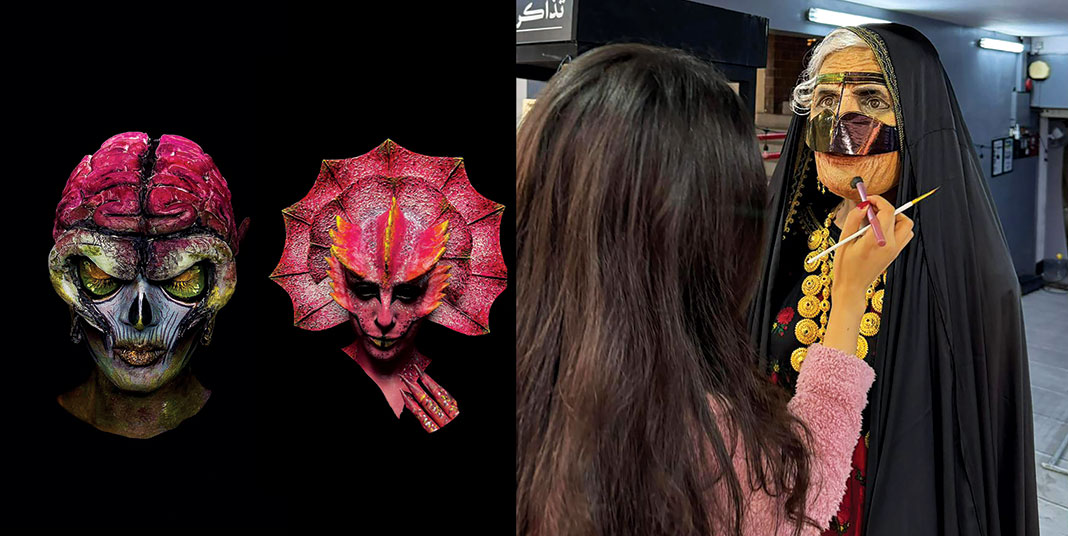
Fatema views her disciplines as interconnected. “What links all my work is art and attention to detail,” she divulges. Architecture provides the framework, while makeup and visual art allow emotion to surface. Over time, this intersection has become her defining approach.
Ideas Taking Shape
Storytelling sits at the centre of her process. Each project begins with a narrative, which she then translates visually through material, texture and light. Fatema shares that she always starts by identifying the story she wants to tell before allowing the medium to shape how that story is expressed. Architecture informs how a piece is built, while makeup allows for a more instinctive response. Together, they form what she describes as “one complete visual work.”
Her working method remains largely consistent across mediums. Research and inspiration come first, followed by sketching, which helps her define mood and direction before a concept takes shape. From there, the work develops gradually through experimentation.
Most creative days are spent at The Creative Co, working alongside her partner and their team. Other days are more exploratory, experimenting with makeup, testing ideas and setting up shoots. She says she knows a piece is finished when she can “step back, look at it and feel genuinely happy and proud.”
 Environmental Influence
Bahrain plays a defining role in shaping her visual language. The country’s architecture and natural light influence how she approaches shadow and texture, while its oral storytelling traditions continue to inform her concepts. Recent work inspired by Um Al Khadr w Al Leef, as well as an immersive horror experience created for Hawa Al Manama, reflects her interest in reinterpreting traditional narratives in contemporary forms. These projects, she notes, are about honouring cultural memory while allowing space for experimentation.
Fatema sees Bahrain’s art scene moving in a positive direction, with increasing support and visibility for local creatives. She hopes her work contributes “a distinct, personal perspective” to that momentum, balancing experimentation with cultural grounding and adding to the wider creative conversation taking shape in the country.
Taking her work beyond Bahrain while continuing to represent Bahraini female artists remains a key aspiration. Her message to young girls considering creative paths is heartfelt:
“Start, even if you don’t feel ready,” she urges. “Explore, make mistakes and trust your voice. Your creativity matters, and it deserves space to grow.”