



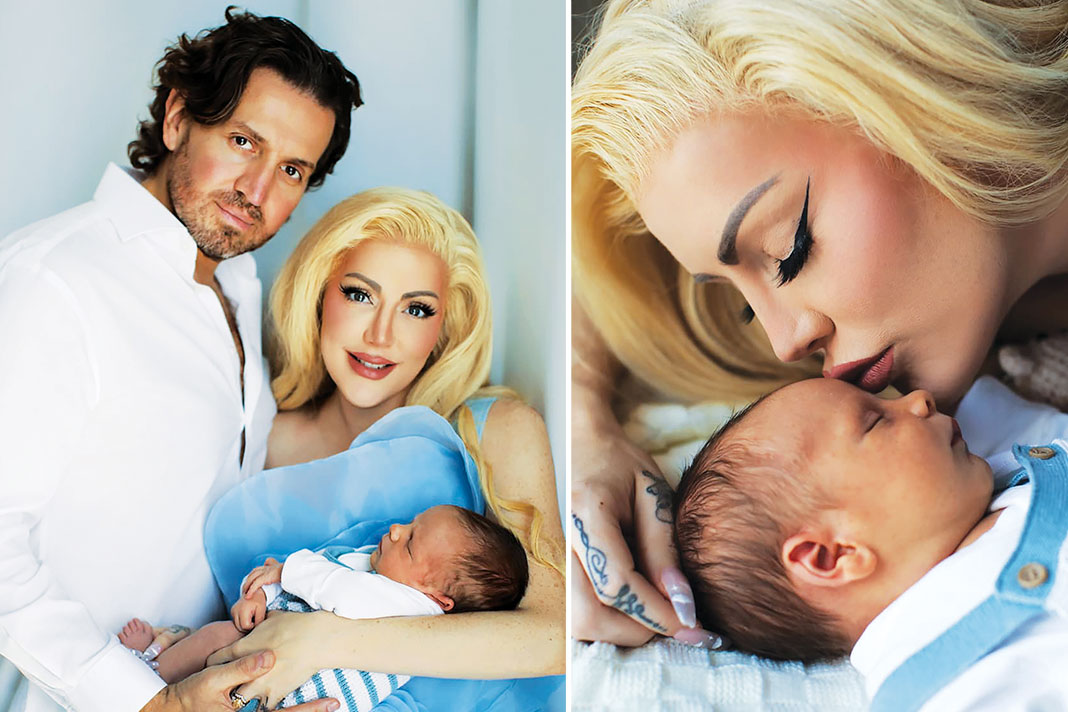
Known for glamour, performance award-winning artistry, Tamar Leek shares a candid reflection on motherhood, identity, self-worth and the emotional realities of becoming a mother.
Tamar may be known publicly for glamour and performance, but motherhood brought her into a very different kind of spotlight – one that forced her to reconsider the relationship she had long had with her body.
Speaking with honesty, she says: “I’ve struggled with an ongoing eating disorder since my teenage years.
“Long before pregnancy, my relationship with my body was complicated. I grew up navigating a lot of criticism, and was bullied throughout my school years. I internalised those voices and became deeply self-critical, almost a bully to myself. Discipline and control became my coping mechanisms.
“The world sees glamour and performance. What it didn’t see was how hard I was on myself behind the scenes.”
Because of that history, she expected pregnancy to be difficult. Instead, it surprised her. “I genuinely thought I would struggle watching my body change. But instead, I loved my bump,” she says. Rather than hiding from those changes, she embraced them, filming pregnancy fashion reels, wearing dramatic silhouettes and celebrating her shape. “I refused to shrink just because I was expecting. Carrying life and still feeling desirable was transformative.”
For Tamar, that shift was not about suddenly becoming free of old struggles. It was quieter than that, but significant. “For the first time, I stopped fighting my body. I listened to it. Pregnancy didn’t erase my struggles, I’m not claiming some perfect recovery, but something shifted.
“I still feel more comfortable being slim. That’s honest. But I’m no longer willing to sacrifice my wellbeing to get there. You can make peace with your body, even if it takes years.”
 Pressure and Permission
Her honesty continues when the conversation turns to breastfeeding, a subject she feels remains far too loaded with judgement. “I feel very passionately about this topic because so many women I know struggled,” she says. “Out of 10 of my close friends, I would say eight couldn’t breastfeed, whether it was supply, medical reasons, mental health, returning to work, or simply that it wasn’t right for them.
“So I see breastfeeding as luck. Not superiority. Not virtue. Just luck.”
Tamar was fortunate in her own experience and speaks warmly about the bond it created with her son. “I enjoyed breastfeeding. It has been one of the most bonding and beautiful experiences of my life, and I’m deeply grateful for that. But the story could have been different for me.”
She is careful to acknowledge the benefits of breast milk, but equally firm that those benefits should never be used to shame women. “I won’t sit here and pretend I don’t believe there are incredible biological benefits to breast milk. The way it adapts, the antibodies, the connection between mother and baby; it is genius design.
“Criticising a mother for what she can’t control doesn’t make anyone superior, it only adds pressure and guilt. If a woman cannot breastfeed, or chooses not to for her mental health, her body, or her circumstances, that decision deserves empathy, not scrutiny.”
Even in the best circumstances, she says, breastfeeding can be demanding. “When my son refused the bottle at four months, I suddenly had very little freedom. That’s manageable for me as a stay-at-home mum. For a woman returning to work, that situation can feel overwhelming.”
For Tamar, the bigger point is compassion. “A mother choosing what is healthiest for her body and mind is also choosing what’s best for her baby. A calm, supported mother matters just as much as the method of feeding.”
Love Under Pressure
Motherhood also tested her marriage. Yet if the early months were intense, they also confirmed what she already knew about the man she chose.
“It took me a long time to find the person I wanted to marry. I was 39 when I met Charles, and I knew I wanted a family, but only with the perfect person for me, someone who shared my values and who was my anchor.”
She does not romanticise what happened after their baby arrived. “Even in the strongest relationships, having a baby tests you. Sleep deprivation, raging hormones, and the sheer responsibility of a tiny human can feel overwhelming. There were times when we argued explosively, simply because we were exhausted, emotional, and figuring out new roles as parents.”
What mattered, she says, was that they remained a team. “Communication, forgiveness, and patience became our lifelines. It wasn’t perfect, but we grew closer, and it strengthened our love and respect for each other.”
That experience has sharpened her view on partnership and family. “I say this with love, choose your partner wisely,” she says. “I’ve been in toxic relationships, and I’ve also been single for many years. I know how hard it can be to wait for the right person. But building a strong, traditional family unit matters deeply to me, and that foundation starts with who you choose.”
At the same time, she adds: “If you are a single mother, I have nothing but admiration for you, your strength is extraordinary.”
Heightened Instincts
Motherhood did not soften Tamar’s self-awareness – if anything, it heightened it. “Motherhood amplified my need for control in ways I didn’t expect. I found myself micromanaging everything, even my husband. I was so obsessed with safety that at times I struggled to trust even the father of my own child. That was confronting.”
Her experience of ADHD added another layer to early motherhood. “ADHD plus baby brain is a wild combination. Sleep deprivation made time management almost impossible. But adrenaline and hypervigilance kicked in, and I operated like I was in emergency mode 24/7.”
There was also a more private struggle in the form of heightened rejection sensitivity and impossible self-expectation. “Postpartum intensified my rejection sensitivity. I took things personally. I felt like I was constantly failing, even though I was giving everything to my baby. The standards I set for myself were impossible.”
Noise, too, became overwhelming. “I’m very sensitive to noise, so when my baby cried, my whole nervous system went into overdrive.” And perfectionism, once useful in her career, became harder to manage. “Perfectionism used to serve me.
It made me disciplined and meticulous in my work. Postpartum, it turned against me.”
Friendship, Grace and Self-Worth
Pregnancy and new motherhood also changed the way Tamar saw friendship. “I cannot be close to people who don’t value the growth of emotional intelligence, or who carry even a trace of jealousy. Jealousy erodes safety in friendship. And when you’re becoming a mother, emotional safety is non-negotiable.”
Some relationships fell away, others deepened. “Some sister-like friendships faltered. Others bloomed into something deeper and more aligned. Those friends who did show up for me, who grew with me and supported my evolving self, became a source of strength for me and my family.”
Throughout it all, Tamar says she often put enormous pressure on herself. “I would mum-shame myself over tiny mistakes and struggle to ask for help, as if needing support meant I wasn’t enough.”
Her message to women struggling is simple: “Give yourself grace. You are not alone. Asking for help does not mean you are failing.”
She also urges women to trust themselves. “If something feels wrong in pregnancy or postpartum, advocate for yourself, even if no one listens at first.” For Tamar, that belief was shaped by painful experience and hard-won intuition.
And if there is one final thought she hopes lingers, it is this: “Like a diamond, you will shine again, this time brighter than ever.”