



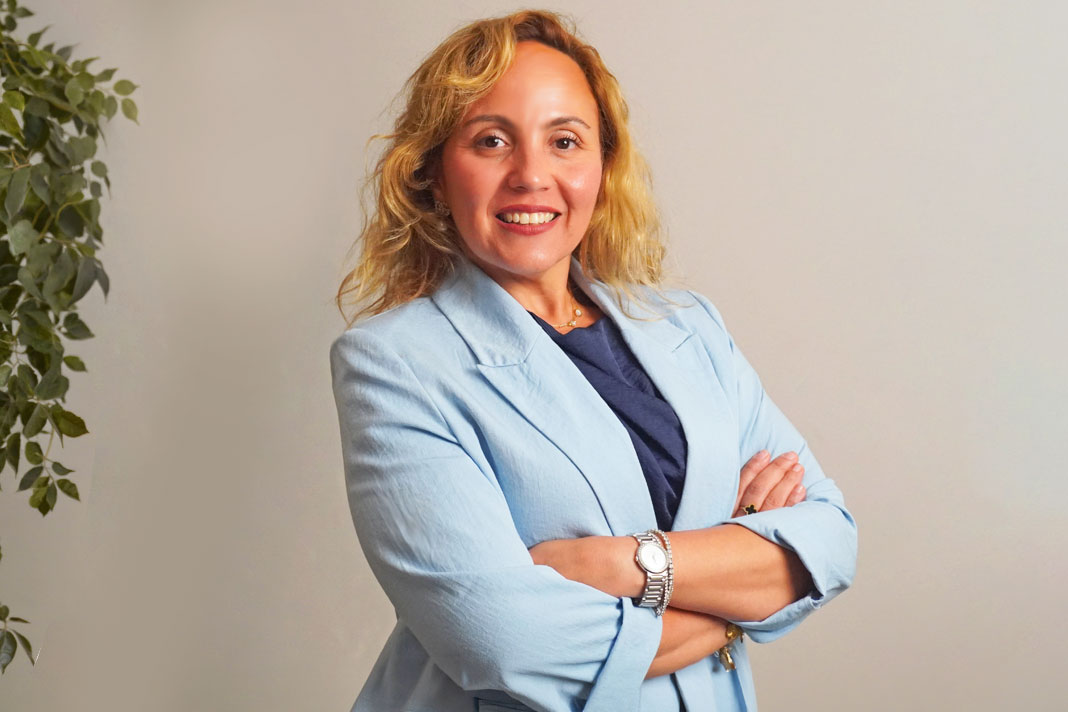
In conversation with Dr. Aseel Zimmo, we explore dispute resolution, mediation, leadership and the human judgement needed to guide complex conflicts across borders and cultures.
Dr. Zimmo’s venture into dispute resolution was a mixture of an interest in law, people, pressure and the search for a way forward when positions appear impossible to reconcile. Her introduction to arbitration came early, while she was still an undergraduate law student in London. Through a respected regional arbitrator, she was exposed to a specialist commercial world that few students around her knew existed.
That experience shaped the direction of her career. She later pursued arbitration and construction law at King’s College London before completing a PhD at the London School of Economics, exploring what international commercial arbitration could learn from Islamic and tribal dispute resolution traditions in the Middle East.
Over three decades, Dr. Zimmo’s work has taken her through private practice, in-house counsel, arbitration, mediation, academia and regulatory development. She has also contributed to Bahrain’s commercial dispute resolution frameworks, an experience she describes as transformative.
“Justice must not only be delivered, it must be seen to be delivered,” she says. “Trust, efficiency, fairness and accessibility are not abstract legal ideals, they are the foundation of commercial confidence and institutional credibility.”
Between Legal Worlds
Dr. Zimmo’s career has unfolded across countries, languages and legal traditions. Born in Amman, educated in London, qualified within the English legal system, later qualified in Jordan and exposed to the US legal approach through her New York qualification, she has built much of her professional life in Bahrain.
Working in both Arabic and English, she says, is “not simply a matter of language translation, it is cultural translation.” Each system carries different assumptions about authority, trust, negotiation and fairness, and understanding those differences is central to effective leadership.
“Credibility in high-stakes rooms is rarely built through technical expertise alone,” she says. “It comes from preparation, composure, listening carefully and understanding what is not being said as much as what is being said.”
That sensitivity is especially important in commercial disputes, where emotions may be restrained but still shape behaviour beneath the surface. For Dr. Zimmo, leadership is about creating confidence in the process, maintaining calm under pressure and adapting to the people in front of you.
The Power of Mediation
Mediation, Dr. Zimmo argues, is still widely misunderstood. It is often seen as a softer alternative to litigation or arbitration, when in reality it demands strategic clarity, psychological insight and careful process management.
“A professional mediator is not simply a ‘peace-maker’,” she says. “Effective mediation requires deep training in negotiation, psychology, communication, conflict analysis and strategic problem-solving.”
Its strength lies in its ability to address more than legal rights. Litigation and arbitration usually decide liability. Mediation can preserve reputations, reshape relationships and help parties reach commercially sensible outcomes they have designed themselves.
“I often describe mediation as peeling an onion layer by layer,” she says. “Beneath every legal argument sits a deeper story, concerns about reputation, respect, fear, relationships, business continuity or future opportunities.”
This is why, in her view, many disputes are not truly legal at their core. Across sectors including construction, telecommunications, real estate and corporate transactions, she has seen conflicts reveal deeper issues: damaged trust, ego, poor communication, power imbalance and weak leadership.
“The legal dispute is often simply the final expression of a much longer human and commercial breakdown,” she says.
Leadership and Presence
As a woman in international arbitration and mediation, Dr. Zimmo has spent much of her career in spaces that were traditionally male-dominated. While she has never wanted to be defined solely by being a woman, she recognises that it has shaped the way she leads.
In mediation, she has often found that being a woman can create space for parties to lower their guard. Behind multimillion-dollar commercial disagreements, she says, there are often questions of respect, trust, reputation and personal relationships.
“What I have learned about authority is that true authority does not come from volume, dominance or intimidation,” she says. “It comes from preparation, composure, credibility and consistency.”
Her advice to younger women entering demanding international fields is direct: “Do not let anyone define your limits for you.” The profession has changed significantly, with technology and remote working creating more flexibility than previous generations had. Yet the deeper message remains timeless.
“Never allow anyone to convince you that you do not belong in the room,” she says. “If you are prepared, disciplined, ethical and committed to excellence, you absolutely do.”
Designing Systems That Work
Beyond case practice, Dr. Zimmo’s work has also involved training, thought leadership and regulatory development. For her, any effective legal or dispute resolution system must begin with the people who will use it.
“What pressures are the users facing? What are the cost implications? How quickly do they need resolution? How accessible is the process?” she asks. “Does the system create confidence and trust? Can people realistically navigate it?”
She believes successful frameworks are not those that look sophisticated in theory, but those that parties trust when the stakes are highest. In Bahrain, she has seen reforms built around genuine commercial needs, creating systems that are practical, credible and user-centred.
Looking ahead, Dr. Zimmo believes the future of dispute resolution will become both more technological and more human. Technology, including AI, can reduce costs, organise information and help manage complex cases. However, she is clear that it must remain a tool rather than a substitute for judgement.
“Efficiency should never be confused with judgment,” she says. “Dispute resolution is fundamentally a human process.”
For Dr. Zimmo, resilience comes from preparation, planning and adaptability, supported by humility and curiosity. Success today is less about titles or recognition than impact. Through teaching, mentoring, mediation and arbitration, she hopes to leave people with something useful: an idea, insight, confidence or a renewed way of approaching conflict.
“You can lead with intelligence and empathy,” she says. “You can be ambitious and human at the same time. You can move across cultures, disciplines and borders without losing your authenticity.”