



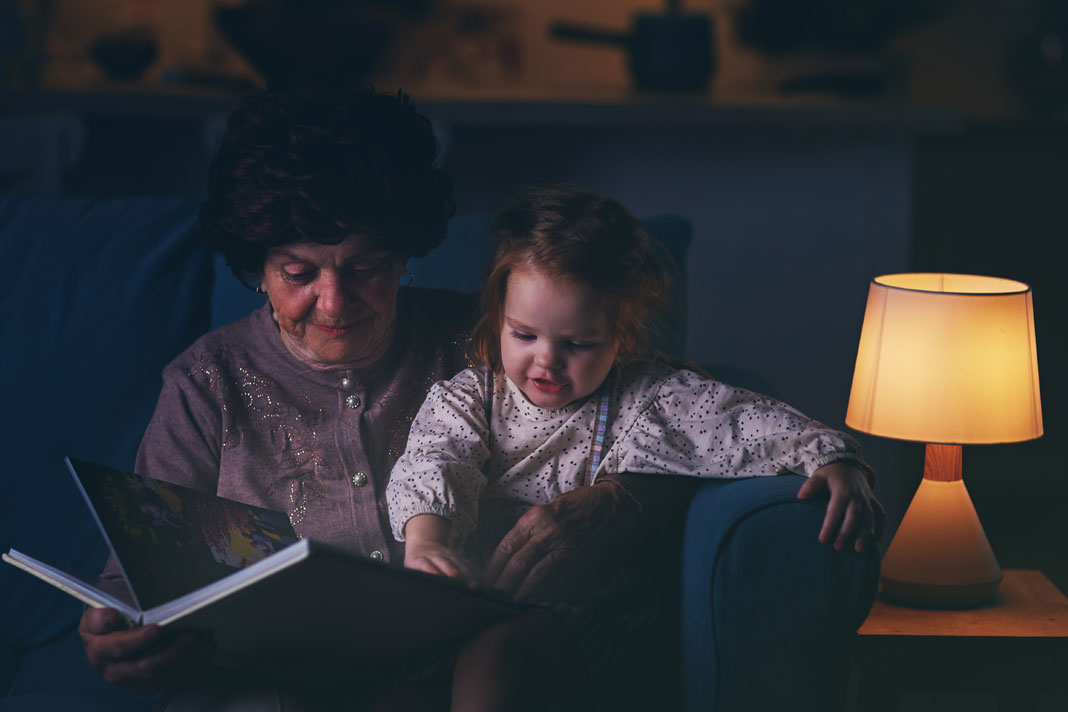
In a fast-moving digital world, Ouiam El Hassani explores how stories, patience and shared curiosity can help children and grandparents rediscover the deep bonds between generations at home once more.
A particular silence can settle in the living room when a child and a grandparent are left alone together. It is not unfriendly, but it can feel like a digital-to-analogue gap as wide as the ocean.
On one side is a child who sees the world through high-definition pixels and instant answers. For them, “long ago” may mean anything before the tablet. On the other sits a grandparent, the keeper of a world in which letters were written by hand, telephones were fixed to walls and patience was a survival skill.
Watching them try to find common language can be amusing, but inside that gap is an opportunity to build a bridge that requires neither Wi-Fi nor a software update.
Shared Stories
The challenge for many modern families is that children often see older relatives as static figures: kind people who offer snacks, ask about school and occasionally seem baffled by online trends. They do not always realise that grandparents were once the protagonists of their own adventures.
To a 10-year-old, Grandma has always been Grandma, a permanent presence in a familiar chair. It can be difficult to imagine her as a rebellious teenager, a nervous new arrival in a different country or a child climbing trees in a neighbourhood that no longer exists.
This is where storytelling becomes powerful. It takes family history and turns it into a living map of identity.
Building that bridge means moving beyond the repetitive question of “How is school?” and towards the colourful details of the past. Children are naturally drawn to stories of mischief and mistakes. When a grandfather describes the time he accidentally let the neighbour’s goats loose or explains how he felt on his first day in a new country, he stops being only an elder and becomes a relatable human being.
Those stories give children a sense of belonging to something larger than their immediate world. They begin to see themselves as the current chapter in a long family narrative. They realise that the resilience they admire in their grandparents is part of the legacy they carry into their own challenges.
Bridging The Gap
Technology is often the elephant in the room. A child may be eager to show off a virtual world they have built, while a grandparent may find the flashing images and rapid movements bewildering. Instead of allowing this to become a point of friction, families can turn it into a tool for connection.
A child can become the teacher, developing patience and communication skills while explaining their digital world. In return, the grandparent can share the low-tech version of the same idea. A conversation about a video game might lead to stories about street games played with sticks and stones 50 years ago. Through these parallels, children learn that while the tools have changed, the desire to play, compete, imagine and create has not.
Ultimately, the bridge between generations is built one story at a time. It is constructed in the pause between a question and an answer, in shared laughter over an old photograph and in the discovery that we are often more alike than we realise.
By helping children connect with the elders in their lives, families give them a priceless gift: a sense of continuity. They show them that they are part of a sturdy bridge stretching back through time and forward into the future they are already helping to build.