




 Rachel Radford is an expat teacher in Bahrain. Her column in Woman This Month dives into pivotal issues impacting women, reflecting her unique perspective and experiences.
It’s an inescapable truth that we are living in a terminally online world. For most of us, doom scrolling and meme sharing are as much a part of our daily rituals as brushing our teeth in the morning and eating dinner at night. While the benefits of this constant connectedness can be many and varied, there is also a darker more insidious side which we would be remiss to ignore.
Understanding the ‘manosphere’
It seems these days more than ever, being online can feel like walking through a minefield of extreme opinions and half-truths. The internet is filled with voices wanting to be heard, and usually those who shout the loudest or have the most controversial things to say are often the ones that get heard. Of these voices, few have garnered as much controversy or warrant as much concern as that of Andrew Tate. If you are one of the lucky ones who has not heard of Tate, please forgive me for being the one to burst that bubble. A self-proclaimed ‘alpha male’ and internet personality, he has become the face of a growing online movement known as the manosphere. And if you’ve never heard of that term before (again, lucky you), buckle up because it’s time we talk about it!
The manosphere is a loosely connected network of influencers, bloggers, YouTubers, and self-help ‘gurus’ who claim to teach men how to reclaim their masculinity which they have been robbed of in a world tainted by feminism and political correctness. On the surface, the advice may seem harmless: lift weights, be confident, make money; but when you scratch beneath that surface just a little, what you find is a worldview dripping in misogyny, entitlement and emotional repression.
The rise of troubling youth
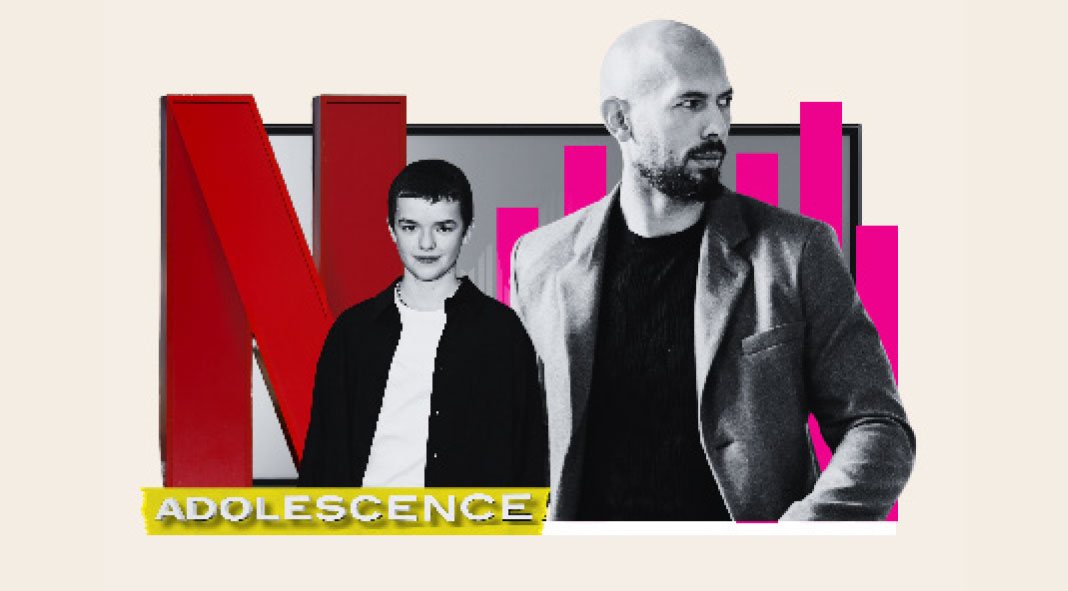
Unless you’ve been living under a rock, you’ve probably at least heard of Netflix’s Adolescence, a chilling drama that explores exactly what can happen when these toxic ideologies take root. The four-part series follows Jamie Miller, a 13-year-old boy who becomes consumed by rage after being rejected by his female classmate, Katie Leonard. Spoiler alert: he murders her! While it’s not an easy watch, in my opinion it is a necessary one. It is a portrayal of how some boys (and men) internalise rejection, not as a normal part of life, but as a personal assault on their worth, their masculinity and their inherent right to be desired.
Watching Adolescence is like watching the manosphere brought to life. Jamie’s emotional fragility, his sense of entitlement and his inability to deal with rejection mirror the exact patterns we’re seeing online with Tate’s followers. And let’s be clear, this isn’t just about one troubled boy in a fictional story. It’s about a very real generation of boys being taught that dominance equals strength, that emotions are weakness, and that women owe them something simply for existing.
The consequences for women
Andrew Tate’s popularity isn’t an accident. He portrays himself as confident, he’s loud and opinionated and appears to have all the trappings of wealth. These are qualities that appeal to young men who feel inadequate in today’s ‘woke’ world. When traditional ideas of masculinity feel under threat, figures like Tate swoop in offering identity, power and purpose. But of course all this comes at a price. One that, unsurprisingly, women must foot the bill for.
As women, many of us are on the front lines of this cultural shift. We’re the mothers hearing our sons mimic toxic talking points. We’re the friends and sisters and daughters trying to explain that being respected isn’t a radical feminist demand, it’s a basic human right.
 So what can we do?
We must start having important and uncomfortable conversations. Ask the young men in your life what they’re watching, what they think and how they feel. Boys, and men of all ages really, need to become more comfortable expressing the emotions they have been taught for too long to suppress.
We also need more emotionally intelligent male role models. Boys need to see that masculinity isn’t about control or conquest, it’s about emotional strength and kindness, confidence without arrogance and vulnerability without shame.
We can’t magically delete the manosphere. But we can dilute its influence by offering something more powerful: connection, compassion and a new vision of what it means to be a man in today’s world.